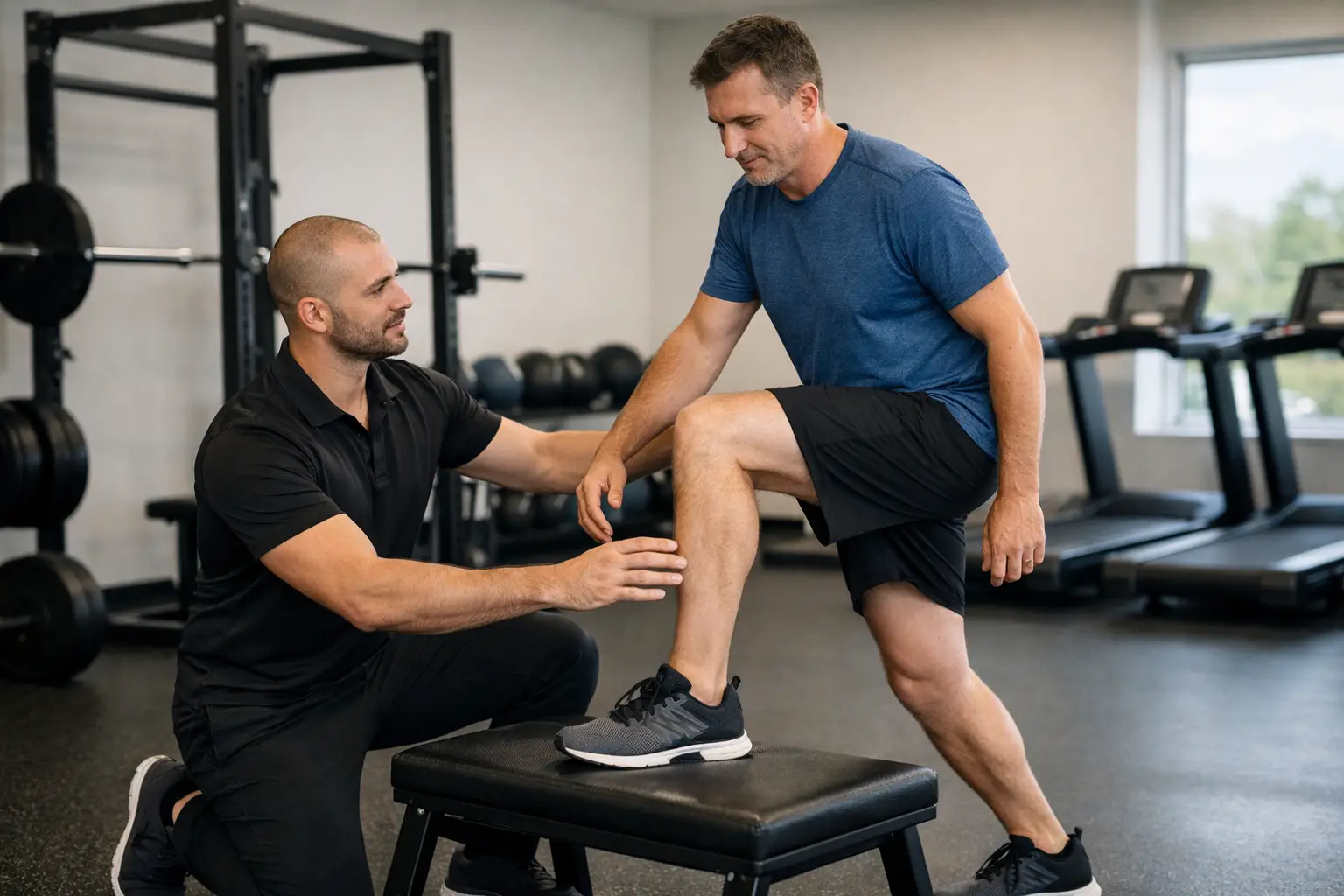
A shoulder that feels fine on the treatment table can still hurt when you press overhead. A knee may settle after a few days off, then flare up on the first run back. This gap is where the benefits of gym based rehab matter most. Recovery is not only about reducing symptoms. It is about rebuilding the strength, movement options, and confidence needed for the things that actually challenge your body.
For active adults, that may mean squatting without guarding your back, carrying your child without worrying about your shoulder, getting through a physical work shift, or returning to a weekend hockey game. Gym-based rehab creates a bridge between early treatment and real life, instead of leaving you to figure out the hardest part alone.
What is gym-based rehabilitation?
Gym-based rehabilitation uses progressive exercise in a dedicated training environment as part of a personalized recovery plan. It is not simply being handed a generic band routine or told to "strengthen your core." The exercises, loads, range of motion, tempo, and progressions are selected around your symptoms, movement limitations, training history, lifestyle, and goals.
Early on, that may look like controlled movements to restore tolerance after a flare-up or injury. As you improve, rehab should begin to resemble the demands you want to return to. A runner may progress from calf raises and single-leg control to hopping and running drills. A lifter may rebuild a squat pattern with modified range or load before returning to heavier barbell work. A desk worker with recurring neck pain may need upper-back strength, better shoulder control, and a plan to tolerate long workdays rather than endless stretching.
The gym is useful because it gives both the clinician and patient room to test, train, and progress movement in a meaningful way.
The benefits of gym based rehab go beyond pain relief
Pain reduction can be a valuable early win, but it is not the only measure of recovery. Symptoms naturally change from day to day, and feeling better does not always mean you are ready for your usual workload. Gym-based rehab shifts the focus toward capacity: what your body can do, how much it can tolerate, and how confidently you can do it.
It rebuilds strength where you need it
After pain or injury, people commonly reduce activity, avoid certain positions, or compensate around the area that feels vulnerable. That can be appropriate for a short period, but avoiding a movement forever rarely prepares you to return to it.
Progressive loading gives muscles, tendons, joints, and your nervous system an opportunity to adapt. The goal is not to force painful exercises or chase exhaustion. It is to find an appropriate starting point and build from there. That might mean a supported split squat before a loaded lunge, or a landmine press before overhead pressing. The right progression makes challenging movement manageable.
It makes rehabilitation specific to your life
A treatment plan should reflect the activities that matter to you. If your pain shows up when lifting a box from the floor, the plan should eventually involve lifting from the floor. If your hip becomes irritated halfway through a run, rehab needs to consider single-leg strength, impact tolerance, training volume, and running demands.
Specificity also matters for athletes and gym-goers. Returning to a recreational sport or a heavy deadlift requires more than being able to perform a low-load exercise in a clinic room. Gym-based care provides a practical setting to build toward those demands with purpose.
It builds confidence through evidence
Many people with recurring pain do not only lose strength. They lose trust in their body. They may brace before bending, skip workouts they enjoy, or assume that a previous flare-up means a movement is unsafe.
Confidence is not created by telling someone to ignore pain or push through everything. It is earned through repeatable experiences: completing a movement, adding a little more load, tolerating a longer session, and seeing that the body can adapt. Those small wins matter. They replace uncertainty with useful information about what you can handle now and what you are ready to build next.
It exposes gaps before your full return
A gym environment makes it easier to identify the difference between basic daily function and true return-to-performance readiness. You may walk comfortably but struggle with a step-down, fatigue quickly in a carry, or lose control during a single-leg task. None of these findings are a reason to panic. They are useful clues for the next phase of rehab.
Finding those gaps in a controlled setting is often better than discovering them during a demanding workout, a tournament, or a long day at work.
Why hands-on care and exercise can work better together
Hands-on treatment can have a place in a complete rehab plan. Chiropractic care, soft tissue therapy, joint mobilization or adjustments when appropriate, massage therapy, cupping, shockwave therapy, and Class IV laser therapy may help reduce symptoms, improve short-term movement tolerance, or make it easier to begin exercising.
But these tools are usually most useful when they support a larger plan. If treatment helps your shoulder move more comfortably, the next question is how to use that improved tolerance. If your back feels less stiff after hands-on care, rehab can help you practise bending, lifting, carrying, and building strength with better control.
This is not an argument against passive care. There are times when symptom relief helps someone sleep, work, or simply start moving again. The limitation is relying on passive treatment alone when your goal is to return to physical demands. Long-term progress often requires active practice and progressive loading.
At Ground Up Chiropractic and Rehab, chiropractic treatment and other hands-on options are used alongside movement assessment and gym-based progressions, not as a substitute for them.
A good rehab plan does not rush the process
Gym-based rehab is not a boot camp, and more intensity is not always better. The right dose depends on the condition, irritability of symptoms, medical history, sleep, stress, current fitness, and the demands you are trying to return to.
Someone with a fresh, highly sensitive injury may need a slower start focused on gentle movement and low-load exercise. Someone several months into a stubborn tendon issue may need more structured strength work and a gradual return to impact or sport-specific drills. Some people need to reduce training volume temporarily. Others can keep training around the problem while building capacity in the affected area.
A useful plan is flexible enough to respond to flare-ups without treating every increase in symptoms as a setback. Mild, short-lived discomfort can sometimes be part of rebuilding tolerance. Sharp pain, escalating symptoms, major loss of function, or symptoms that feel concerning deserve reassessment by a qualified healthcare professional.
What gym-based rehab should look like in practice
The best plans are clear. You should understand what the clinician is assessing, why certain exercises were chosen, what you are aiming to improve, and how progress will be measured. That may include range of motion, strength, endurance, balance, lifting tolerance, running volume, or sport-specific tasks.
Your program should also fit your actual week. A busy parent or professional may need two focused sessions and a few movement strategies between meetings. A competitive athlete may need closer integration with an existing training program. The ideal plan is not the most complicated one. It is the one that is specific enough to create progress and realistic enough to follow consistently.
Good rehab also evolves. Exercises that were challenging in week one should not remain your entire plan months later if your goal is to return to heavier lifting, running, or sport. Progress may involve more range, more load, more speed, less support, greater complexity, or a more demanding training environment.
When gym-based rehab may be especially useful
This approach can be valuable for recurring back, neck, shoulder, hip, knee, and ankle symptoms, as well as tendon pain, training-related injuries, postural limitations, and return-to-sport goals. It is particularly helpful if you have felt temporarily better after treatment but symptoms return once you resume normal activity.
It can also help people who have been told to rest but are unsure how to restart safely. Rest can calm an aggravated area in the short term, but it does not always answer how to return to lifting, running, golfing, working overhead, or playing with your kids. A graded plan provides that missing middle.
The point is not to make every person train like an athlete. The point is to give your body enough targeted challenge to better handle the life you want to live.
If pain, weakness, or recurring flare-ups have made you pull back from training or daily activity, an assessment can help identify what is contributing and what a realistic progression could look like. Start with the next movement you need to own, then build from there.
