You can have the perfect training plan and still stall out if your recovery is an afterthought. The best recovery habits for athletes are not flashy, and they are not reserved for pros with unlimited time. They are the repeatable things that help you handle training load, bounce back faster, and avoid the cycle of soreness, stiffness, flare-ups, and missed sessions.
Most athletes do not need more random recovery tools. They need a better system. If you are lifting hard, running often, playing weekend sports, or trying to stay active around work and family, recovery has to fit real life. It also has to match your training demands, injury history, sleep, stress, and current capacity. That is where a lot of people get stuck. They chase quick relief instead of building habits that actually support performance.
What the best recovery habits for athletes actually do
Recovery is not just about feeling less sore the next day. Good recovery habits help your body adapt to training, restore energy, maintain tissue capacity, and keep movement quality from dropping off as fatigue builds. They also help you spot when your body needs a lighter day, a change in volume, or a more structured rehab plan.
That matters because there is a difference between normal training fatigue and the kind of recurring tightness or pain that keeps showing up for months. Soreness after a hard session is expected. Losing range of motion every week, feeling unstable under load, or aggravating the same shoulder, back, knee, or Achilles issue over and over is a sign that your recovery plan may be incomplete.
1. Protect your sleep like it is part of training
If there is one habit that consistently outperforms the fancy stuff, it is sleep. Sleep affects tissue recovery, energy, coordination, mood, pain sensitivity, and training output. Athletes who sleep poorly often feel it everywhere - slower warm-ups, heavier legs, lower motivation, and more irritation from old injuries.
That does not mean you need perfect sleep every night. It means you should treat sleep as a skill worth improving. A consistent bedtime, reduced screen exposure before bed, a cooler room, and limiting late caffeine can make a bigger difference than most recovery gadgets.
If your schedule is unpredictable, focus on consistency over perfection. Even adding 30 to 60 minutes of sleep most nights can improve how you feel and perform.
2. Match your recovery to your training load
One of the most overlooked recovery habits is simply respecting how hard you are training. The session that leaves you smoked on Monday affects what you can recover from on Tuesday and Wednesday. If volume, intensity, work stress, poor sleep, and extra activity all stack up at once, your body eventually lets you know.
This is where athletes get into trouble with the all-or-nothing mindset. They feel beat up, take a few days completely off, then jump right back into the same workload. A better approach is load management. That could mean adjusting volume, spacing hard sessions better, or replacing one high-stress workout with lower-intensity movement.
Recovery works best when training is dosed properly. If your plan constantly exceeds your current capacity, no amount of stretching, massage, or ice baths will fully clean that up.
3. Keep moving on recovery days
Total rest has a place, especially if you are sick, acutely injured, or deeply fatigued. But for most athletes, light movement helps more than doing nothing. Walking, easy cycling, mobility work, low-intensity swimming, or a lighter technical session can improve circulation, reduce stiffness, and help you feel more normal the next day.
The key is keeping the intent truly easy. Recovery movement should leave you feeling better, not like you snuck in another workout. If your heart rate is high, your legs are burning, or your symptoms ramp up, you missed the point.
Best recovery habits for athletes include fuelling properly
A lot of active adults under-recover because they under-eat. This is especially common in people training early, squeezing workouts between meetings, or trying to eat "clean" while also pushing performance. If you are not taking in enough overall energy, protein, and carbohydrates, your recovery suffers.
You do not need a perfect meal plan to improve this. Start by making sure you eat regularly, include protein at each meal, and do not ignore carbs around harder training sessions. Hydration matters too, especially for runners, field sport athletes, and anyone sweating heavily in warm conditions.
If you finish a long session and wait hours to eat or drink, recovery gets harder than it needs to be. Simple habits done consistently usually beat overly strict nutrition rules.
5. Use mobility with a purpose
Mobility can be useful, but only when it solves an actual problem. Doing random stretches every night because social media told you to is not the same as addressing a restriction that affects your squat, overhead position, running stride, or rotational control.
For some athletes, mobility helps reduce stiffness and improve movement options. For others, the issue is not mobility at all. It is stability, strength, fatigue, or technique. That is why the right question is not "What should I stretch?" It is "What is limiting me, and what type of work addresses that best?"
If your hip always feels tight, your shoulder keeps pinching, or your lower back stiffens every time training volume increases, a proper movement assessment can help identify whether the answer is mobility work, strength progressions, hands-on treatment, or a change in programming.
6. Build strength that supports recovery, not just performance
Strong athletes usually recover better because they have more capacity to tolerate load. That does not mean piling on extra lifting when you are already overcooked. It means using strength work strategically to improve tissue tolerance, control, and resilience.
This is especially important when you are coming back from pain or injury. Recovery is not complete just because symptoms calm down. If you do not rebuild strength through the ranges and demands your sport requires, the same issue often returns when training intensity picks up again.
That is why rehab should not stop at pain relief. Progressive strength-based rehab helps bridge the gap between feeling better and actually being ready to train, lift, run, jump, rotate, or change direction with confidence.
7. Do not rely on passive care alone
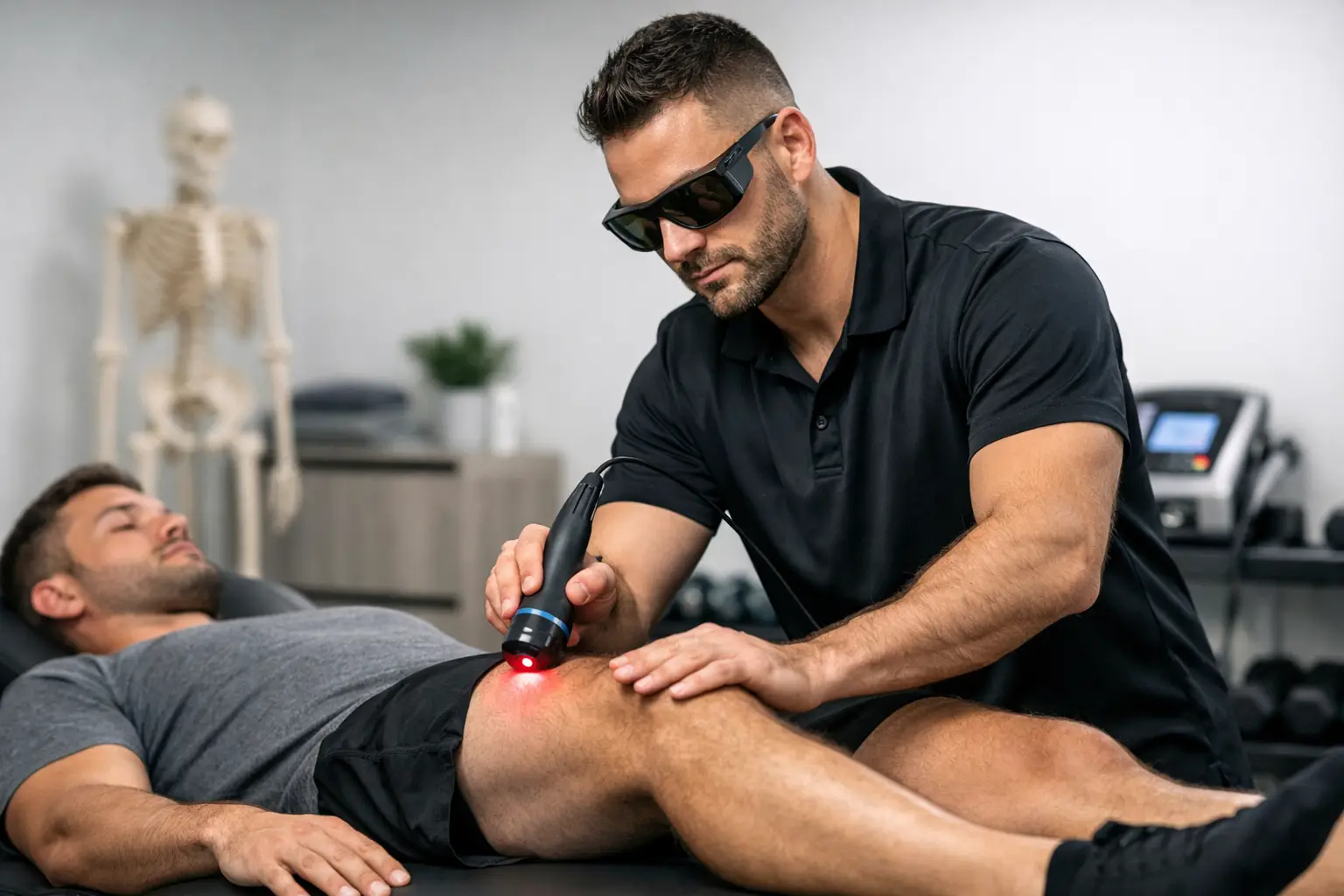
Hands-on treatment can absolutely help. Chiropractic care, soft tissue work, massage therapy, joint mobilization, adjustments when appropriate, cupping, shockwave therapy, and Class IV laser therapy can all play a role in reducing pain, improving comfort, and helping you move better.
But passive care works best when it is part of a larger plan. If treatment gives temporary relief and symptoms keep returning as soon as training resumes, that usually means there is still a load, movement, strength, or recovery problem that has not been addressed.
The athletes who do best long term usually combine symptom management with a clear progression. They understand what is contributing to the issue, what to modify short term, and what they need to build so they can return to sport without constantly second-guessing every session.
8. Pay attention to patterns, not just pain
Pain is one signal, but it is not the only one worth tracking. A dip in performance, unusual stiffness during warm-up, slower recovery between sessions, poor sleep, irritability, or feeling unstable under load can all be clues that your system is under more stress than it can currently handle.
This does not mean every rough workout is a red flag. Hard training should feel hard. But if the same warning signs show up week after week, listen to them early. It is much easier to adjust a plan when you are mildly overloaded than when you are already dealing with a more significant setback.
9. Make recovery realistic enough to repeat
The best plan is the one you will actually follow. If your recovery routine takes two hours a day, depends on perfect discipline, or only works when life is quiet, it will probably fall apart. Most athletes need recovery habits that fit around jobs, commutes, kids, and inconsistent schedules.
That might mean a 10-minute mobility block instead of an elaborate routine, a walk after dinner, a protein-rich meal prepped ahead of time, or a smarter training split that respects your busiest days. Recovery is less about doing everything and more about doing the right things often enough.
10. Get assessed when recovery is not fixing the problem
Sometimes the issue is not that you need more recovery habits. It is that something more specific is being missed. If you are doing the basics well and still dealing with recurring pain, repeated flare-ups, or performance limitations, it makes sense to get assessed.
A good rehab-focused assessment looks beyond the sore area. It considers movement quality, strength, training load, sport demands, work stress, previous injuries, and the patterns that keep bringing you back to the same problem. From there, treatment can be more specific. That might include chiropractic care, physiotherapy, massage therapy, hands-on work, exercise progressions, or gym-based return-to-performance rehab depending on what you actually need.
At Ground Up Chiropractic and Rehab in Hamilton, that kind of approach matters because athletes rarely need a one-note solution. They usually need a plan that helps them move better, manage symptoms, rebuild capacity, and return to training with more confidence.
When recovery needs to become rehab
There is a point where normal recovery strategies stop being enough. If pain changes how you train, limits your range of motion, affects your sleep, or keeps showing up in the same pattern, you may be past the stage of self-managing it with rest and stretching.
That is not a reason to stop being active. It is a reason to get a clearer picture of what is going on. The goal is not to avoid movement. The goal is to find the right level of movement, treatment, and progression so you can keep building instead of repeatedly backing off.
Athletes tend to do best when recovery stops being reactive. Not something you think about only when you are sore, hurt, or burnt out. Something built into how you train, how you fuel, how you sleep, and how you respond when your body starts giving you useful feedback. If this sounds like what you are dealing with, book an assessment online and we will help you figure out the best next step.
