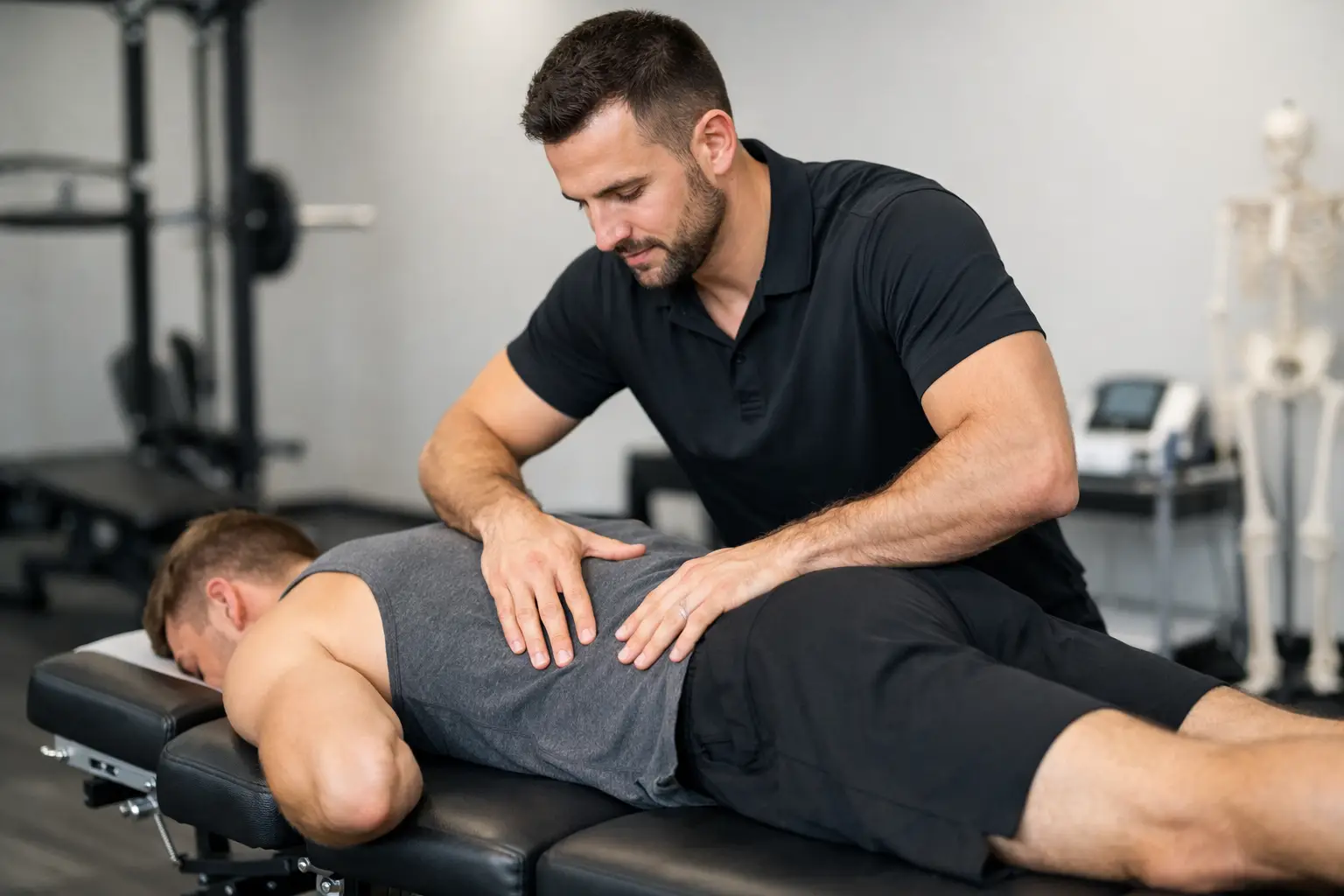
You tweak your back on deadlifts, your shoulder starts barking during presses, or your knee keeps flaring up every leg day. The frustrating part is not just the pain. It is that rest, stretching, and random Instagram rehab drills often do not tell you why it keeps happening. That is where chiropractic for gym injuries can help - when it is part of a bigger rehab plan built around movement, strength, and getting you back to training with confidence.
A lot of active people have tried some version of quick treatment before. A few minutes on the table, maybe an adjustment, maybe some soft tissue work, and short-term relief that fades as soon as training ramps back up. If that sounds familiar, the issue is usually not that treatment never helps. It is that treatment alone is often incomplete.
What chiropractic for gym injuries should actually look like
If you lift, run, do CrossFit, train for sport, or just like pushing yourself in the gym, your body is not only dealing with pain. It is dealing with load. That matters.
A rehab-focused approach to chiropractic for gym injuries should look at how you move, what exercises trigger symptoms, how much volume and intensity you are doing, what positions you tolerate poorly, and what your body does when it gets fatigued. It should also factor in your work life, sleep, stress, training history, and previous injuries. A desk worker who lifts four days a week has different demands than a runner training for a half marathon or a parent trying to get back into the gym after months of inconsistent training.
Hands-on care still has value. Joint mobilization, adjustments when appropriate, soft tissue treatment, cupping, shockwave therapy, and Class IV laser therapy can all help reduce pain, improve tolerance, and create a window for better movement. But that window only matters if you use it. Real progress usually comes from pairing symptom relief with mobility work, exercise progressions, strength rebuilding, and a plan to return to training properly.
Why gym injuries keep coming back
Most gym injuries are not caused by one simple thing. Sometimes there is a clear moment, like a heavy pull from the floor or a bad rep overhead. Other times it builds slowly - an irritated shoulder that started as tightness, or a hip that feels pinchy deeper into each squat cycle.
Usually, recurring pain involves a mix of factors. Training errors are one piece. Maybe volume jumped too fast, technique changed under fatigue, recovery was poor, or a movement pattern kept getting loaded even though your body was already compensating. Mobility restrictions, previous injuries, stiffness in nearby joints, reduced tissue capacity, and loss of confidence can all keep the problem going.
This is why a generic sheet of exercises or a one-size-fits-all treatment plan often misses the mark. Two people can both have shoulder pain on bench press and need very different plans. One may need better thoracic mobility and cuff strength. Another may need load management, pressing modifications, and a gradual return to heavier barbell work. The symptom is similar. The strategy should not be.
The most common injuries we see in gym-goers
Not every ache means you need treatment, and not every injury needs you to stop training completely. But certain patterns show up again and again in active adults.
Low back pain is a big one, especially with deadlifts, squats, Olympic lifting, and high-volume functional fitness training. Sometimes the back is the main issue. Sometimes it is taking up stress because the hips are stiff, the trunk is not handling load well, or fatigue is changing mechanics late in a set.
Shoulder pain is another common one. Pressing, pull-ups, kipping, dips, and overhead work can expose limitations in mobility, control, strength, or programming. The answer is not always to stop overhead work forever. Often it is to find the right entry point, calm things down, improve movement options, and rebuild capacity.
Knee pain tends to show up with squats, lunges, running, jumping, and stairs. Hip irritation, ankle stiffness, quad weakness, tendon overload, and abrupt changes in training can all contribute. Elbow pain, wrist pain, neck tension, and hip pinching are also common, especially in people who train hard while balancing long workdays and inconsistent recovery.
Where chiropractic fits in - and where it does not
Chiropractic can be useful for gym injuries when it is used the right way. If a joint is stiff, a region is irritated, or pain is making you move differently, hands-on care may help reduce symptoms and improve short-term range of motion. That can make training modifications easier and allow rehab work to feel more productive.
But chiropractic is not a shortcut around rebuilding strength, improving movement quality, or managing load. If you have been dealing with the same flare-up for months, the long-term solution is rarely just more passive treatment. It is more likely a combination of symptom management and progressive rehab that gives your body a better ability to handle the demands you place on it.
That is a big difference. The goal is not to make you dependent on treatment. The goal is to help you understand what is driving the issue, improve your tolerance to training, and reduce the chance that every heavy session turns into another setback.
What a better rehab plan includes
The best rehab plans for lifters and active adults are specific. They do not just say stop everything and come back in six weeks. They also do not pretend you should train through anything no matter what. There is a middle ground, and that is usually where progress happens.
A good plan starts with a detailed assessment. That means looking at your symptoms, training history, aggravating lifts, mobility, strength, control, and how your body responds to certain positions and loads. From there, treatment can include chiropractic care, soft tissue therapy, massage therapy, physiotherapy-based rehab strategies, or other tools that make sense for your presentation.
Then comes the part many people miss - progression. Your exercises should have a purpose. Your training should be adjusted, not abandoned. You may need temporary changes to range, tempo, grip, stance, exercise selection, or weekly volume. As symptoms settle and capacity improves, those progressions should move you back toward the lifts and activities that matter to you.
In a rehab setting with gym space, this process gets more practical. Instead of only talking about a squat problem, you can actually work through squat modifications, strength progressions, and return-to-performance steps in real time. That matters for people who want more than pain relief. It matters for people who want to trust their body again.
When to get assessed
If pain has been lingering for more than a week or two, keeps coming back when you increase training, or is changing how you move in the gym, it is worth getting it looked at. The same goes for sharp pain, noticeable weakness, reduced range of motion, or symptoms that are stopping you from doing normal daily activities.
There are also times when gym injuries need medical evaluation first, especially after a major traumatic event or if symptoms are severe, progressive, or not behaving like a typical training-related issue. A proper assessment helps sort that out rather than guessing.
For many active adults in Hamilton, the biggest benefit of booking an assessment is clarity. You find out what movements are actually aggravating the problem, what you can keep doing safely, what needs to be modified for now, and what kind of plan gives you the best chance of returning to training without another cycle of flare-ups.
The goal is not just less pain
Less pain is a good start. It is just not the finish line.
The real goal is to help you move with more freedom, train with more confidence, and build enough capacity that your body is not constantly one bad session away from another setback. That usually takes more than a quick fix. It takes a rehab plan that respects how active people actually live and train.
At Ground Up Performance & Rehab, that means looking beyond the sore spot. It means combining hands-on care with movement assessment, progressive rehab, and gym-based strength work so treatment matches real life, not just the treatment table.
If your workouts keep getting interrupted by the same pain, there is value in getting a plan that makes sense for your body and your training goals. Feeling better matters. Building back stronger matters more.
