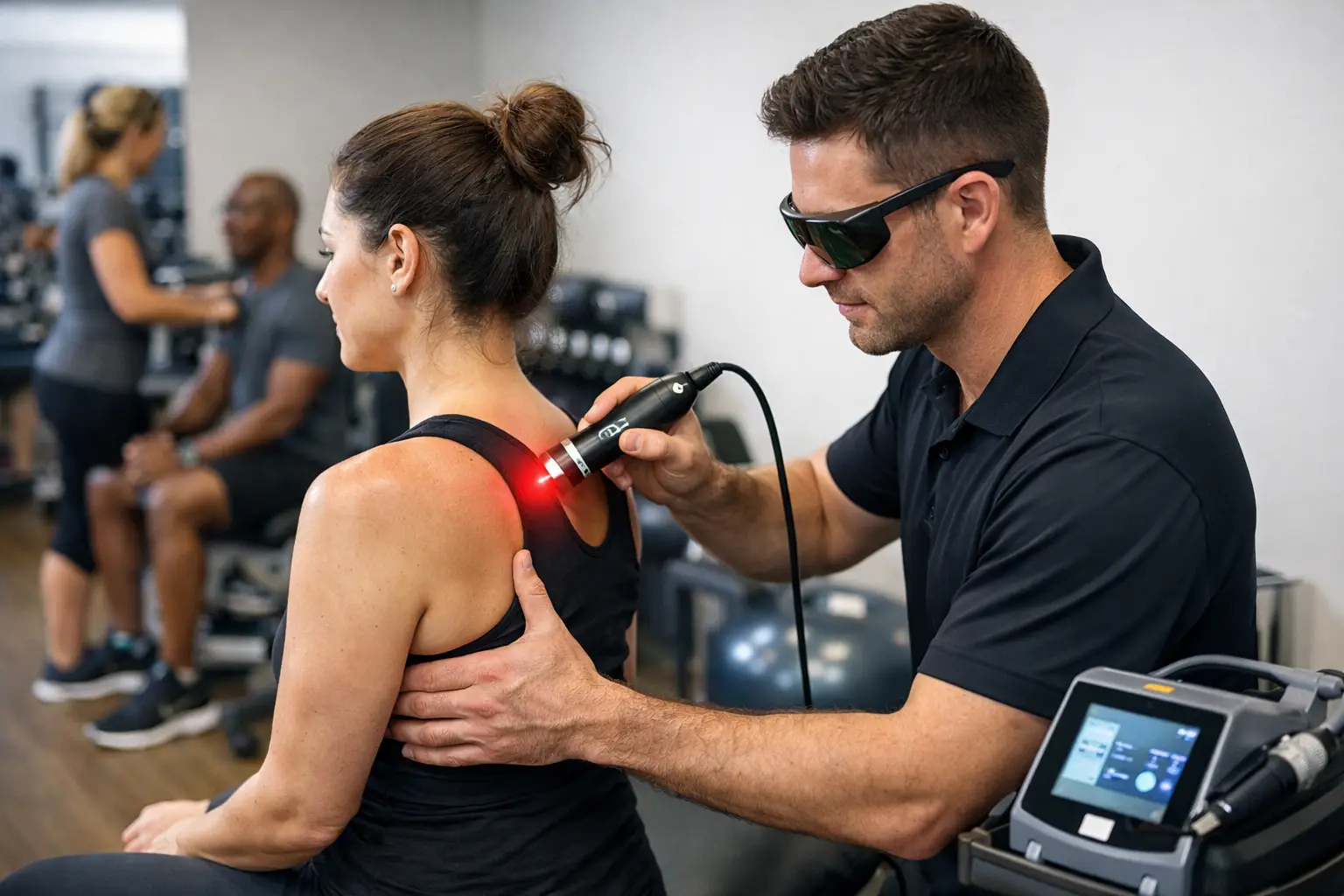
When a shoulder still hurts every time you press overhead, or your Achilles keeps barking after runs, most people are not looking for another trendy treatment. They want something that helps calm things down enough to move, train, and rehab properly. That is where class iv laser therapy benefits can make sense - not as a magic fix, but as one useful tool inside a bigger recovery plan.
At a rehab-focused clinic, the question is never just, “Can this reduce pain?” The better question is, “Will this help you tolerate movement, load the tissue, and get back to what matters?” Class IV laser therapy can be valuable because it may help reduce pain, settle irritated tissue, and support healing in a way that makes the next step of rehab easier.
What is Class IV laser therapy?
Class IV laser therapy uses higher-powered therapeutic light to deliver energy into injured or irritated tissue. The goal is to stimulate a biological response in the area being treated. In plain language, that means the laser is used to help calm inflammation, improve circulation, and encourage tissue repair.
This is different from the kind of cold laser people sometimes picture from older low-level devices. A Class IV laser can reach deeper tissues and deliver a stronger therapeutic dose in less time. That can make it more practical for issues involving muscles, tendons, joints, ligaments, and some nerve-related pain presentations.
You will usually feel warmth during treatment, but it should not feel aggressive or sharp. The experience is straightforward, and sessions are typically short. Still, the bigger value is not the machine itself. It is how the treatment is matched to your presentation, your irritability level, and your rehab plan.
Class IV laser therapy benefits for active people
The most useful class iv laser therapy benefits are not flashy. They are practical. If you are an active adult, athlete, runner, golfer, or desk worker trying to get through the day without constant flare-ups, those practical wins matter.
Pain relief that makes movement possible
Pain changes how people move. It makes you guard, compensate, avoid positions, and lose confidence in training or even basic daily activity. One of the main reasons clinicians use Class IV laser therapy is to help reduce pain enough that you can actually start doing the work that leads to longer-term progress.
That matters if squatting irritates your knee, turning your neck feels restricted, or gripping a bar lights up your elbow. If symptoms settle even a notch, you are often in a better position to move with less compensation and better control.
Reduced inflammation and tissue irritation
Inflammation is not automatically bad. It is part of the healing process. But when tissue stays irritated, pain can linger and loading becomes harder to tolerate. Laser therapy may help modulate that inflammatory response, which can be useful in both newer injuries and stubborn overuse problems.
For example, someone dealing with plantar heel pain, rotator cuff irritation, or patellar tendon pain may not need total rest. They usually need symptoms brought down to a level where progressive loading becomes possible. This is where laser can fit well.
Better circulation and cellular activity
A lot of therapeutic conversations get too technical too fast. The simple version is this: Class IV laser therapy is used to stimulate cells and improve local blood flow, which can support tissue healing. That does not mean a torn structure suddenly repairs overnight. It means the environment for recovery may improve.
For people who have had a nagging issue for weeks or months, small changes in the healing environment can matter. Not because the laser replaces rehab, but because it may help the body respond better while rehab is happening.
Improved tolerance to rehab and training
This is the benefit that often gets overlooked. If treatment helps you walk more comfortably, lift with less pain, or tolerate your mobility work without flaring up, that changes the whole rehab process. It gives you more room to make progress.
At that point, the laser is doing its job as an assist. It helps create a window where strength work, mobility drills, manual therapy, and gradual return-to-sport progressions can actually stick.
What conditions can it help with?
Class IV laser therapy is often used for a wide range of musculoskeletal issues. That includes tendon pain, muscle strains, ligament sprains, joint irritation, neck and back pain, plantar fasciitis, shoulder pain, tennis elbow, Achilles issues, and some nerve-related symptoms.
That said, not every painful problem responds the same way. A fresh ankle sprain may benefit differently than a long-term hip issue driven by training load, weakness, and movement limitations. A desk worker with neck tension and headaches may need a different plan than a runner with persistent calf tightness and Achilles pain.
This is why assessment matters. Good treatment is not about throwing every modality at the problem. It is about identifying what tissue is involved, what is driving the symptoms, what your current capacity looks like, and what needs to change for you to improve.
When Class IV laser therapy works best
The best results usually happen when the laser is part of a broader strategy. If a treatment reduces pain but nothing changes about your strength, mobility, workload, or movement habits, the relief may be temporary.
That is not a failure of the treatment. It just means pain is only one piece of the puzzle.
It helps when symptoms are blocking progress
Sometimes the main barrier is irritability. The tissue is too sensitive, and every attempt at exercise feels like too much. In that situation, Class IV laser therapy can help calm things enough to start progressing again.
This is common with tendon flare-ups, acute back pain episodes, shoulder irritation, and overuse injuries where the person is stuck in a cycle of rest, retry, flare-up, repeat.
It is useful alongside hands-on care and exercise
A complete plan may include joint mobilization or adjustments where appropriate, soft tissue treatment, movement retraining, mobility work, and progressive strengthening. Laser therapy can complement that plan by helping reduce pain and tissue sensitivity between sessions and during the early stages of loading.
For active patients, this matters because the real goal is not just feeling better on the table. It is returning to lifting, running, golf, work, or parenting demands with more confidence and capacity.
What Class IV laser therapy does not do
This part matters just as much as the benefits. Class IV laser therapy does not fix every condition, and it does not erase the need for rehab. If your shoulder pain is tied to poor load management, limited thoracic movement, cuff weakness, and a training program that outpaces recovery, a laser alone will not solve that.
It also is not the right fit for every person or every stage of recovery. Some cases respond better to a different treatment emphasis. Others need imaging, medical evaluation, or a more cautious plan if symptoms are severe, unusual, or not behaving as expected.
That is why a good clinician does not oversell modalities. They use them when they fit, explain why, and connect them to the bigger goal.
Why this matters in a rehab setting
The biggest mistake people make is judging a treatment only by how they feel in the next 24 hours. Short-term pain relief is useful, but it is not the finish line.
In a modern rehab setting, the point of using Class IV laser therapy is to create momentum. If pain drops, movement improves, and you can start building strength and load tolerance, that is a meaningful shift. It moves you away from chasing symptoms and toward actually improving the system around the injury.
That approach is especially relevant for people who have already tried passive care, random stretches, or generic exercises without a clear plan. They do not need more guesswork. They need treatment that supports a progression.
At Ground Up Chiropractic & Rehab, that is the standard lens. Tools like Class IV laser therapy are used to support recovery, but the bigger focus stays on assessment, movement quality, progressive rehab, and helping people return to activity stronger and more prepared.
Is Class IV laser therapy worth trying?
If you are dealing with pain that is limiting training, work, or daily movement, Class IV laser therapy may be worth considering when it is recommended as part of an individualized plan. It can be especially helpful when tissue irritation is high and you need a way to reduce pain enough to start moving and loading properly.
The key is expectations. Think of it as a treatment that may help create better conditions for recovery, not as a shortcut around the work. The people who tend to do best are the ones who use that symptom relief as an opportunity to rebuild strength, improve movement, and gradually return to the things they care about.
If your current plan is only trying to make pain disappear, you may keep ending up in the same spot. If the plan helps you calm symptoms and then build capacity, you are giving yourself a much better shot at lasting progress.
The right treatment should help you move forward, not just feel temporarily managed.
