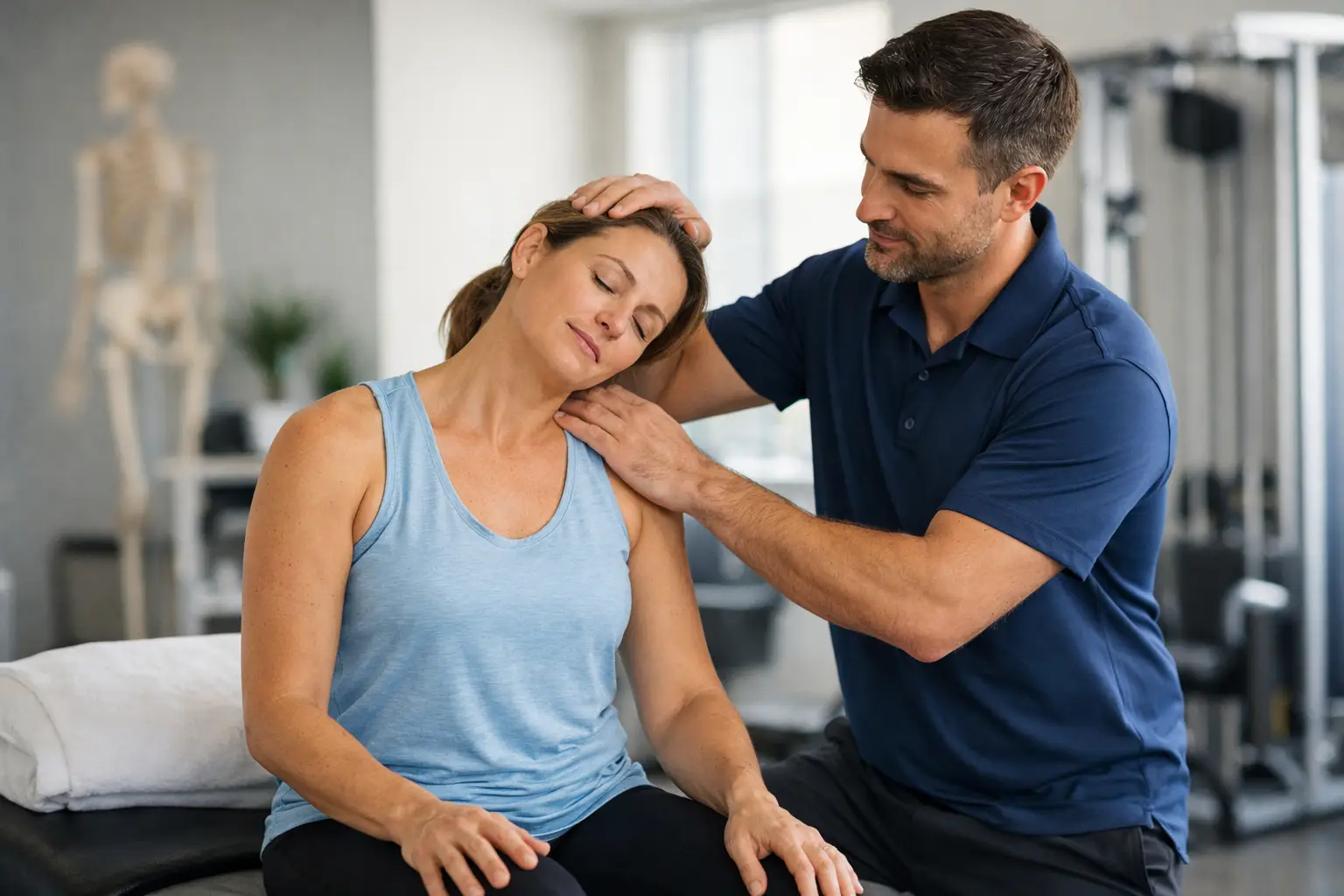
That sharp catch when you check your blind spot, look down at your phone, or get out of bed can make a normal day feel needlessly difficult. If you are wondering how to reduce neck stiffness, the answer is rarely one perfect stretch or a single treatment. It is usually about calming an irritated area, restoring comfortable movement, and gradually rebuilding the capacity to handle the positions and demands that keep setting it off.
Neck stiffness is common in desk workers, tradespeople, parents carrying kids, gym-goers, drivers, and athletes. It can arrive after an awkward sleep, a long day at a laptop, a hard training session, or seemingly without a clear trigger. Most episodes are not dangerous, but recurring stiffness is worth addressing when it limits work, training, driving, or daily activity.
What neck stiffness actually feels like
Neck stiffness is a symptom rather than one specific diagnosis. It may feel like restricted turning, tightness across the upper trapezius or base of the neck, a pulling sensation into the shoulder blade, or pain when looking up, down, or over one shoulder. Some people wake with a neck that feels "stuck." Others notice it builds gradually through the day.
The neck does not work in isolation. Your upper back, shoulder blades, jaw, breathing patterns, workload, sleep position, and general activity level can all influence how it feels. That does not mean you need to chase a perfect posture or assume something is out of place. It means the goal is to identify what your neck is currently less tolerant of, then build that tolerance back up.
Stiffness can also occur alongside headaches, shoulder discomfort, or symptoms into the arm. Those details matter because they can change what assessment and treatment should focus on.
Common reasons your neck keeps getting stiff
A sudden increase in demand is one of the most common contributors. This might be an extra-long drive, hours spent preparing for an exam, a new lifting program, overhead work, a weekend of yard work, or carrying a child more than usual. The neck and upper back may simply be underprepared for the volume, position, or load they have been asked to manage.
Sustained positions can contribute too, but they are not automatically harmful. Sitting at a computer for several hours is not inherently bad. The issue is often that you have stayed in one position longer than your body currently tolerates, without enough movement variety or recovery.
Stress, poor sleep, reduced activity after a flare-up, and guarding after a minor strain can also amplify stiffness. In some cases, a shoulder problem, upper-back restriction, or jaw tension contributes to neck symptoms. This is why generic online advice can miss the mark. Two people can describe a stiff neck but need very different plans.
How to reduce neck stiffness without overdoing it
The most useful first step is to keep the neck moving within a tolerable range. Complete rest can feel tempting, especially during a sharp flare-up, but avoiding all movement for days often makes the area feel more guarded. Instead, aim for frequent, easy movement that does not cause a significant or lasting increase in symptoms.
Try gently turning your head right and left, nodding as if saying yes, and looking slightly up and down. Move slowly and stop short of forcing through sharp pain. A mild stretch, tightness, or discomfort can be acceptable. Pain that is sharp, escalating, or leaves you substantially worse later is a sign to reduce the range, repetitions, or intensity.
Heat can make movement more comfortable for some people, particularly when the neck feels guarded after sleep or a long workday. Others prefer a cold pack after an acute irritation. Neither option fixes the underlying issue on its own, but either can be useful if it helps you move more normally.
It also helps to change positions before discomfort becomes intense. For computer work, that may mean standing up, walking for a minute, or doing a few neck and upper-back movements every 30 to 60 minutes. For drivers, adjust the seat and mirrors so you are not repeatedly craning your neck forward or twisting awkwardly. These are practical load-management changes, not rules you need to follow perfectly forever.
Be careful with aggressive stretching
When the neck feels tight, the instinct is often to pull hard on it or force a deep stretch. That can be counterproductive when the area is already irritated. If stretching provides short-term relief but stiffness returns immediately, you may need more than flexibility work.
Use gentle mobility as a way to explore comfortable range, then pair it with strengthening and better exposure to the activities that matter to you. A neck that feels stiff during deadlifts, cycling, painting ceilings, or long meetings may need a plan that accounts for that specific demand.
Build capacity with strength and progressive loading
Once symptoms are settling, rehabilitation should move beyond passive relief. The goal is not simply to get your head turning farther in the clinic. It is to help you tolerate training, work, sport, and everyday life with more confidence.
A rehab plan may include controlled neck strengthening, deep neck flexor work, upper-back and shoulder-blade exercises, and progressive loading of the shoulders and trunk. For example, someone whose neck stiffens during overhead lifting may benefit from improving shoulder and upper-back strength while gradually reintroducing pressing. Someone whose symptoms appear after laptop work may need a combination of movement breaks, upper-back endurance, and a more realistic workday activity plan.
The right dose matters. Starting with very light resistance and building over time is usually more productive than doing a demanding routine once, flaring up, and stopping for two weeks. Progress is rarely perfectly linear. A brief increase in stiffness can happen as you become more active, but it should settle reasonably and not progressively worsen from session to session.
When neck stiffness needs an assessment
A clinician should assess neck stiffness that is severe, keeps returning, follows a significant injury, or does not improve with sensible self-management. An assessment is also useful when you are changing your training or work habits repeatedly just to avoid symptoms.
Seek urgent medical attention if neck symptoms occur with any of the following:
- new or progressive arm weakness, marked numbness, or loss of coordination
- difficulty walking, balance changes, or changes in bladder or bowel control
- fever, unexplained weight loss, severe unrelenting pain, or a severe headache unlike your usual headaches
- neck pain after a significant fall, collision, or other trauma
These situations are less common, but they should not be managed with self-treatment alone.
What a thorough neck assessment should look at
A useful assessment is not just someone checking whether your neck turns left or right. It should include a conversation about how symptoms started, what aggravates and eases them, your training and work demands, previous episodes, and the activities you want to get back to.
Physical testing may look at neck movement, upper-back and shoulder mobility, strength, neurological signs when relevant, movement tolerance, and the specific tasks that reproduce your symptoms. If looking over your shoulder while driving is the problem, that movement matters. If stiffness develops only after an hour of desk work or during barbell training, the assessment should account for that context.
At Ground Up Rehab in Hamilton, care is built around that full picture. Hands-on treatment such as joint mobilization or manipulation when appropriate, deep soft tissue therapy, instrument-assisted soft tissue work, cupping, or Class IV laser therapy may help reduce pain and make movement easier in the short term. These tools are not presented as standalone cures. Their value is in helping create a better window for movement, exercise rehabilitation, and progressive return to the things you need to do.
A better target than perfect posture
Many people have been told their neck stiffness is caused by bad posture. Posture can influence comfort, especially when you have been fixed in one position for a long time, but there is no single perfect posture that prevents pain. Trying to hold yourself rigidly upright all day can create more tension, not less.
A better target is movement variety and capacity. Set up your workspace so you are reasonably comfortable, change position often, and build the strength and endurance to handle the demands of your day. The same principle applies to the gym: good technique matters, but a gradual increase in training volume matters just as much.
If neck stiffness is making it hard to train, work, drive, or sleep comfortably, book an assessment to get a plan that helps you move with more confidence instead of simply waiting for the next flare-up.
