Your shoulder feels better after treatment, but the pain comes back when you press overhead. Your back loosens up after an adjustment or massage, but sitting all week still sets it off. That is where the manual therapy vs rehab conversation matters. A lot of active adults are not choosing between good care and bad care. They are choosing between short-term relief and a plan that actually helps them stay active.
The truth is, this is not an either-or debate.
Manual therapy can be useful. Rehab can be essential. The better question is when each one helps, what each one cannot do on its own, and how they work together if your goal is more than just getting through the next few days.
Manual therapy vs rehab: what is the difference?
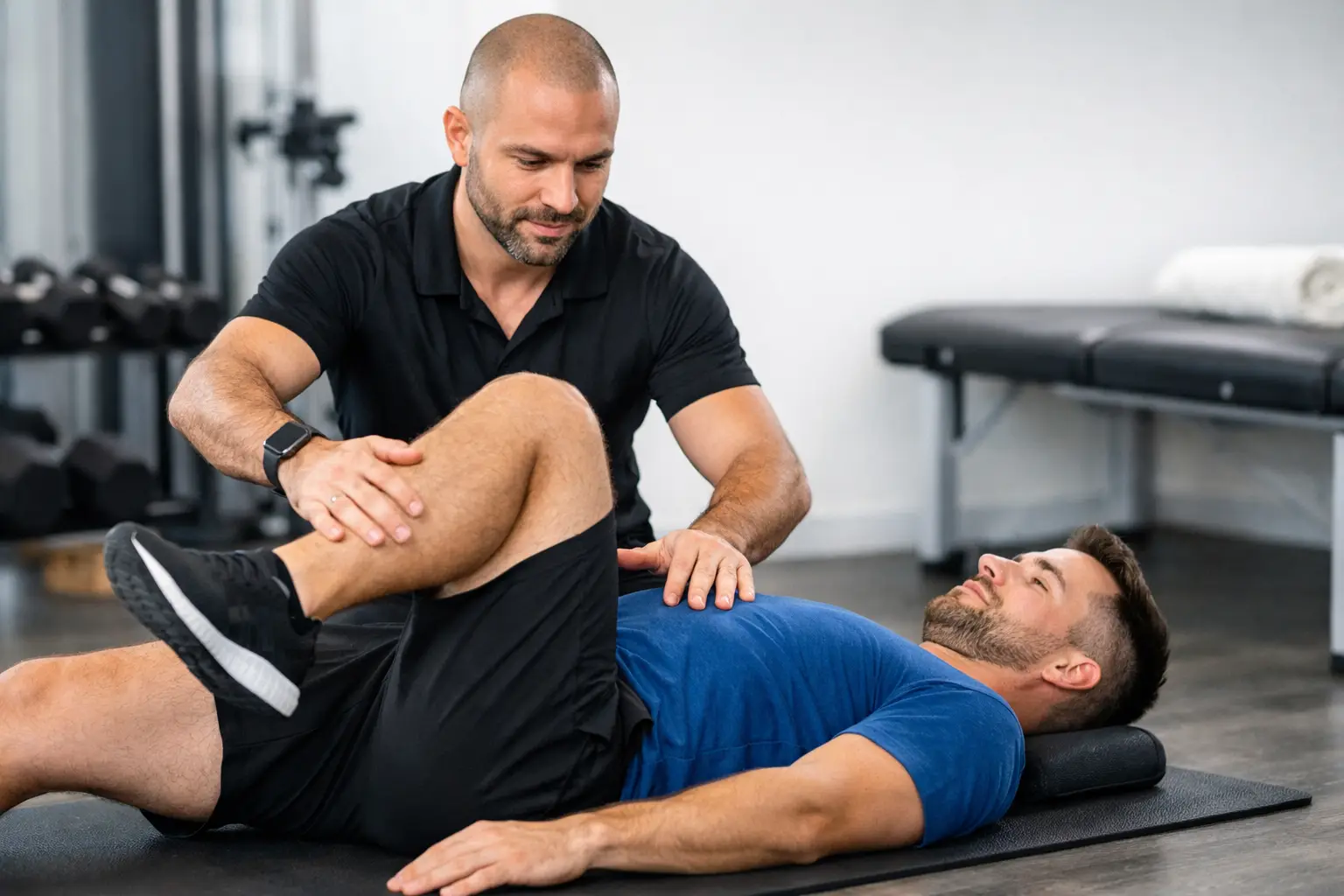
Manual therapy is hands-on treatment. That can include joint mobilization, chiropractic adjustments, soft tissue work, massage therapy, assisted stretching, and other techniques aimed at reducing pain, improving comfort, or helping a stiff area move a little better.
Rehab is active care. It usually includes movement assessment, mobility work, strength training, exercise progressions, load management, and return-to-activity planning based on your symptoms, goals, and physical demands.
One approach is done to you. The other is done with you.
That does not make manual therapy passive and useless or rehab hard and superior in every case. It just means they do different jobs. If someone has acute pain, guarding, or major stiffness, hands-on treatment may help calm things down enough to start moving better. But if they never rebuild strength, capacity, coordination, or tolerance to load, they often end up back in the same cycle.
Why manual therapy feels good but may not be enough
There is a reason people keep booking massage, adjustments, or soft tissue work. It often helps. Pain can drop. Range of motion may improve. You may feel looser, lighter, and more comfortable right away.
That matters.
If your neck is so stiff you cannot turn to check your blind spot, or your low back is locked up after a heavy deadlift session, short-term symptom relief is not a bad thing. It can make movement easier, reduce sensitivity, and create a window where rehab is more tolerable.
The problem starts when hands-on treatment becomes the whole plan.
If your shoulder hurts because your training volume jumped too fast, your thoracic mobility is limited, and your rotator cuff and upper back are not tolerating load well, no amount of temporary release work changes that by itself. If your knee pain settles after treatment but comes back every time you run hills, there is probably still a gap in strength, mechanics, tissue tolerance, or programming.
Manual therapy can help symptoms. It usually does not build capacity.
That is the key distinction.
Why rehab tends to create longer-term change
Rehab asks a different question. Instead of only asking, how do we reduce pain today, it asks, why does this keep showing up, what can you currently tolerate, and what needs to improve so you can get back to lifting, running, working, or playing your sport with more confidence?
That shifts the plan.
A good rehab program does not stop at clamshells and band exercises unless that is truly where you need to start. It progresses. It looks at how you move, where you compensate, what loads aggravate symptoms, and what your actual goal is. A desk worker with recurring neck pain needs a different plan than a hockey player with adductor issues or a parent whose back flares every time they lift their toddler.
Rehab also gives you something manual therapy alone cannot: self-efficacy. You learn what you can do, how to modify, how to reload, and how to build back toward your normal activities. That matters for both physical recovery and confidence.
When people say they have tried treatment before but nothing lasted, that often means they got symptom relief without enough progression.
Manual therapy vs rehab in real-world cases
If you strain your back and can barely bend, forcing straight into heavy rehab on day one may not make sense. You may need a few early wins first. Joint mobilization, soft tissue treatment, chiropractic care, or other hands-on techniques can help reduce irritation and make movement less threatening. Then rehab helps restore flexion tolerance, hip control, trunk strength, and confidence under load.
If you are dealing with long-standing shoulder pain, manual therapy may improve comfort and overhead motion, but rehab is usually what helps you press, throw, carry, or train without repeated flare-ups.
If you are a runner with Achilles pain, massage may make the tendon feel less stiff for a bit. What tends to matter more over time is how you reload the calf complex, manage running volume, and improve lower limb capacity.
If you sit all day and your neck and upper back constantly tighten up, hands-on care might be part of the answer. But if you never improve postural endurance, thoracic mobility, strength, and movement variability, the same tension often keeps coming back.
Different problem, same pattern. Relief is helpful. Capacity is what changes the trajectory.
The best care plan usually includes both
This is where a lot of people get stuck in the wrong debate. They think they need to choose sides.
In practice, the strongest treatment plans often combine manual therapy and rehab instead of treating them like opposing camps. Hands-on care can reduce pain, improve tolerance, and help you move. Rehab can then use that window to build something that lasts longer.
That combination matters even more if your goal is performance, not just pain reduction.
If you want to get back to squatting, golfing, running, working long shifts, or training hard without feeling fragile, you usually need more than symptom management. You need a plan that matches your sport, job, lifestyle, and current baseline.
That is also why quick appointments and generic sheets of exercises often miss the mark. They may check a box, but they do not always address the reason your symptoms keep returning.
What to look for if you want more than temporary relief
A useful treatment plan should explain what the clinician thinks is contributing to the problem, not just where it hurts. It should also show you how the plan will progress.
That does not mean every case needs a complicated roadmap on day one. It means your care should connect the dots between pain, movement, load, and the activities you want to return to.
For many active adults, that means assessment first, then the right mix of tools. That may include chiropractic treatment, physiotherapy, massage therapy, soft tissue work, joint mobilization, mobility drills, strength-based rehab, and sometimes options like shockwave therapy, Class IV laser therapy, or cupping. Those can all have a place. None of them should be the whole story.
The real value is not the tool itself. It is using the right tool at the right time, for the right reason, while building toward a clear goal.
At Ground Up in Hamilton, that is the difference. Care is built around movement assessment, hands-on treatment when appropriate, and progressive rehab that carries over into the gym, sport, work, and daily life. That approach fits people who are tired of getting short-term relief without a real path forward.
So which one should you choose?
If you are very flared up, guarded, or struggling to move, manual therapy may be a good starting point. If your symptoms keep returning, rehab probably needs to be a bigger part of the plan. If you want the best chance at both feeling better and staying better, a combination usually makes the most sense.
There is no gold medal for picking the most hardcore option. You do not get extra points for skipping hands-on care if it would help, and you do not get long-term results from avoiding exercise if your body clearly needs more capacity.
The right plan is based on where you are now and where you want to go.
If your pain keeps cycling, or you feel stuck between temporary relief and recurring setbacks, that is usually a sign to stop chasing isolated treatments and start following a more complete rehab process. Book an assessment online and we will help you figure out the best next step.
