Your back loosens up after a massage, but it tightens again after a long desk day. Or your physio gave you exercises, but your shoulder still feels guarded when you press overhead. These are common frustrations, and they are exactly why the question of massage therapy vs physiotherapy for recovery deserves more than a simple answer.
Both can be valuable. Neither needs to be treated as an either-or decision. The better question is: what does your body need right now to get back to training, work, sport, or daily life with more confidence?
For some people, massage therapy is the right starting point because pain, muscle tension, or stress is making movement feel difficult. For others, physiotherapy is more useful because they need a clearer diagnosis, a plan for an injury, and progressive exercise. Most active adults do best when hands-on treatment and movement-based rehab work together instead of competing.
Massage Therapy vs Physiotherapy for Recovery: The Core Difference
Massage therapy primarily focuses on soft tissue. A registered massage therapist may use techniques such as targeted pressure, myofascial work, stretching, and movement to address areas that feel tight, sore, sensitive, or overloaded. Treatment can help reduce short-term discomfort, improve relaxation, and make it easier to move through ranges that previously felt restricted.
That can matter a lot. If your calves are constantly stiff after running, your upper back is tense from computer work, or your quads are sore after returning to the gym, massage may help settle symptoms enough for you to move more comfortably. It can also be a practical recovery tool during a busy training block, especially when sleep, stress, and workload are not perfectly managed.
Physiotherapy generally takes a broader rehab lens. A physiotherapist assesses your symptoms, movement, strength, joint function, activity demands, and relevant health history. From there, they can help you understand what may be contributing to the problem and build a plan that can include education, hands-on treatment, mobility work, exercise, and progressive return to activity.
The key difference is not that one is passive and one is active. Great massage therapy can include movement education, and physiotherapy often includes hands-on care. The distinction is usually the primary goal. Massage often helps you feel and move better in the short term. Physiotherapy more directly builds a structured path from pain or injury toward restored capacity.
When Massage Therapy May Be the Better Fit
Massage therapy can be especially helpful when your main limitation is muscle soreness, tension, or a sense that your body needs to calm down before it can tolerate more movement. This might include the desk worker with a consistently tight neck and upper traps, the runner whose calves are carrying too much load, or the lifter who feels generally beat up after a hard training phase.
It may also be a good option when you are already following a strength or rehab program but need support managing soreness and maintaining comfortable movement between sessions. In that context, massage is not replacing training. It is helping you stay consistent with it.
Massage can be useful after a flare-up, but expectations matter. Feeling looser after treatment does not automatically mean an injury is resolved or that you are ready to return to full training. A massage can change symptoms and help you tolerate movement, but lasting recovery usually requires the right amount of loading over time.
If you find yourself booking massage every few weeks because the same area always tightens back up, that is not a failure of massage. It may simply mean there is another piece missing, such as strength, training volume, movement confidence, recovery habits, or a return-to-sport progression.
When Physiotherapy May Be the Better Fit
Physiotherapy is often the stronger starting point when pain is affecting what you can do. Think of a shoulder that hurts during pressing, a knee that flares up on stairs or runs, an ankle that still feels unstable after a sprain, or low back pain that keeps disrupting deadlifts and workdays.
A detailed assessment helps move beyond vague advice like “just rest it” or “stretch more.” Your physiotherapist can look at the specific task that aggravates you, whether that is a squat, golf swing, long commute, overhead lift, or weekend run. The goal is to identify meaningful limitations and create a progression that fits your actual life.
That progression may begin with simple exercises that reduce irritability and restore control. As symptoms settle, the plan should evolve. A runner may build calf and hip strength before increasing mileage. A gym-goer with shoulder pain may improve pressing tolerance through smart loading, not by avoiding upper-body training forever. A parent with back pain may need a plan that makes lifting a child, carrying groceries, and getting back to the gym feel manageable again.
Physiotherapy is not just for a fresh injury. It can be valuable for recurring flare-ups, persistent stiffness, post-surgical rehabilitation, or performance limitations that have not improved with generic exercises. If you have tried rest, online mobility routines, or intermittent passive treatment without a clear return-to-activity plan, a physiotherapy assessment can provide the structure that has been missing.
Why Hands-On Treatment Alone Is Often Not Enough
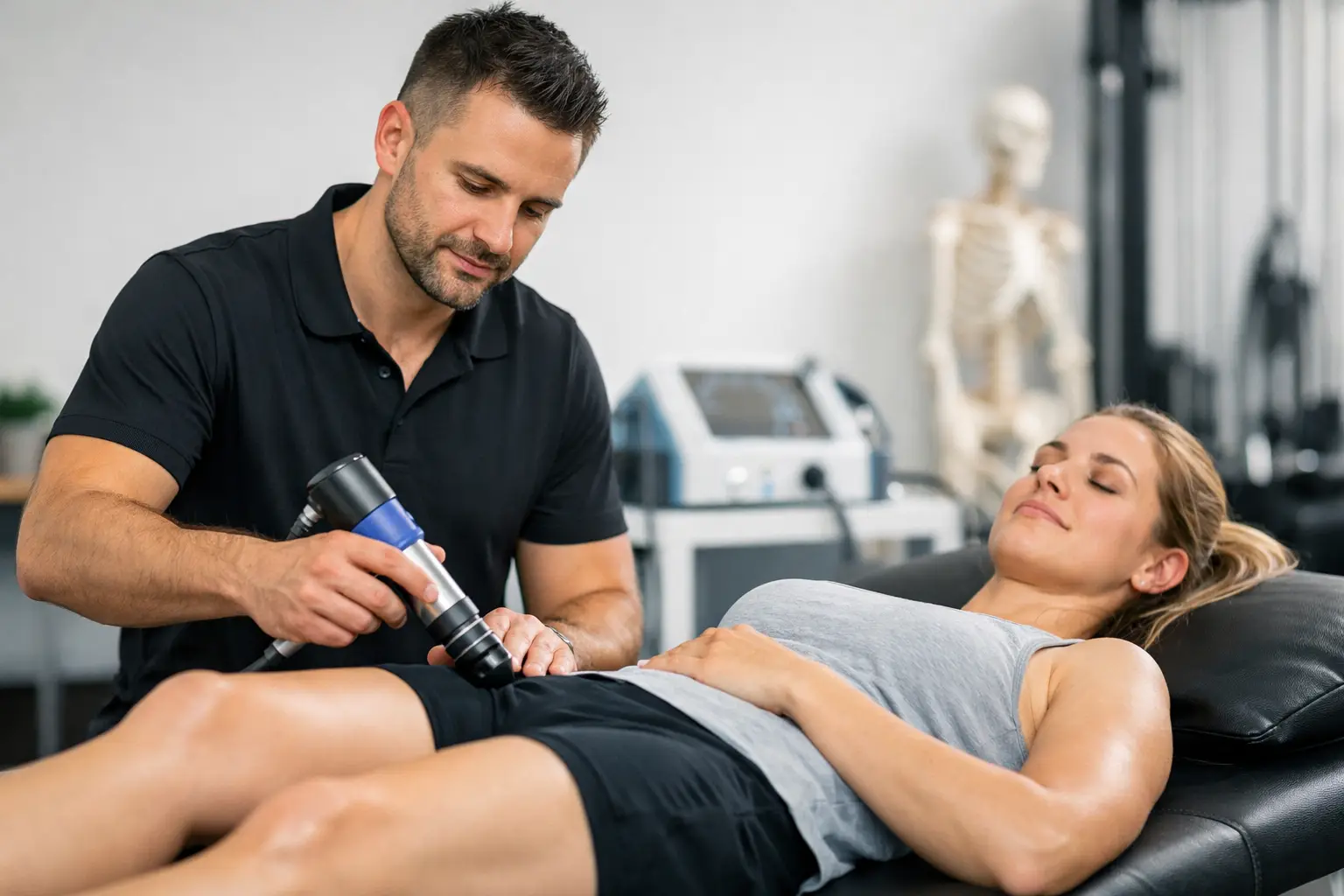
Hands-on care can be useful. Soft tissue therapy, joint mobilization, massage, chiropractic adjustments when appropriate, cupping, shockwave therapy, and Class IV laser therapy may all have a place in helping reduce symptoms or improve movement tolerance. But they are tools, not the entire plan.
Recovery is rarely about finding one tight muscle or one joint that needs to be fixed. Pain and recurring symptoms can be influenced by training load, work demands, sleep, previous injury, stress, strength, movement habits, and how confident you feel using the area again. A good rehab plan accounts for those factors without making recovery unnecessarily complicated.
The long-term question is whether you can handle the things that matter to you. Can your knee tolerate a longer run? Can your shoulder press, pull, and carry? Can your back manage a full workday and a training session? Capacity is built through progressively exposing your body to those demands.
That does not mean every appointment needs to feel like a workout. It means treatment should lead somewhere. If manual therapy helps you squat with less pain, the next step may be using that window to rebuild squat tolerance. If massage helps your neck move more freely, the next step may be improving your workstation setup, upper-back strength, and daily movement breaks.
The Best Recovery Plan Is Often Collaborative
For many people, the most effective answer is not massage therapy or physiotherapy. It is coordinated care based on what is limiting progress.
At Ground Up Chiropractic and Rehab in Hamilton, that may mean beginning with a movement assessment, then combining physiotherapy, registered massage therapy, rehab-focused chiropractic care, and gym-based strength progressions as needed. Someone with an irritated shoulder may benefit from soft tissue work to make movement more comfortable, joint treatment where appropriate, and a progressive loading plan that rebuilds confidence overhead.
A recreational runner with recurring calf tightness may need massage for symptom management, but also ankle and calf strength work, running-load adjustments, and a gradual plan for increasing distance. A desk worker with headaches and upper-back tension may respond well to hands-on care while building better tolerance for sitting, training, and daily activity.
The right mix changes as you recover. Early on, hands-on care may be more useful when symptoms are sensitive and movement feels threatening. Later, the emphasis should shift toward strength, coordination, conditioning, and return-to-performance work. That shift is where many people finally stop cycling through the same flare-up.
How to Choose Your Next Step
Start with your main barrier. If you are mainly dealing with general muscle soreness, stress-related tension, or a need to recover between demanding weeks, massage therapy may be a practical fit. If pain is limiting a specific activity, you have had a meaningful injury, or the issue keeps returning despite temporary relief, physiotherapy is often the better first step.
If you are unsure, look for a clinic that can assess the full picture rather than forcing every problem into one service. You should leave with a clear explanation, a plan that matches your goals, and a realistic idea of what you can continue doing now.
Seek prompt medical assessment for severe trauma, sudden unexplained weakness, major swelling, fever, loss of bladder or bowel control, or other concerning symptoms. For most training, work, and activity-related problems, though, the next step is simpler: book an assessment and build a recovery plan that helps you do more than feel better for a day. The goal is to return to the things you care about stronger, more capable, and less dependent on temporary relief.
