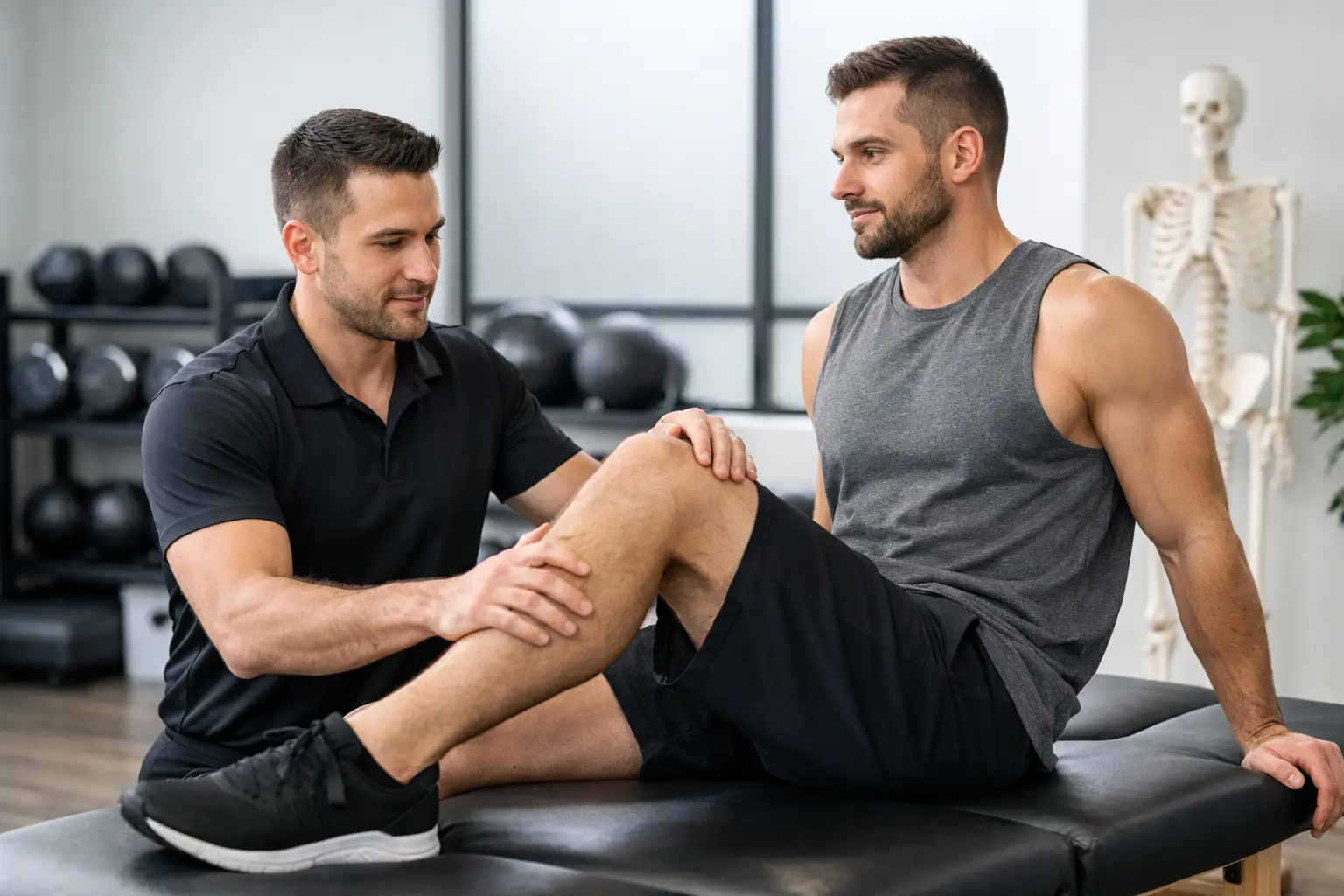
You hit the bottom of a squat and feel a familiar pinch in your hip. Your shoulder complains every time the bar moves overhead. Your back settles down for a few days, then flares up after deadlifts again. The frustrating part is not always the pain itself. It is wondering whether you should train through it, stop altogether, or keep trying random mobility drills that do not change much.
Physiotherapy for gym goers in Hamilton should give you a clearer answer than “just rest” or “avoid that exercise forever.” A good rehab plan looks at what hurts, how you move, what your current training demands are, and what you want to get back to - whether that is lifting heavier, doing your first pull-up, keeping up with a busy workout schedule, or simply moving without second-guessing every rep.
Why gym injuries often keep coming back
Most gym-related pain is not caused by one “bad” movement. Sometimes there is a clear event, such as missing a lift or feeling a sharp pull during a heavy set. More often, symptoms build gradually when your training load, recovery, movement options, or current capacity are no longer lining up.
That does not mean your technique is terrible or that you are broken. It may mean you added volume faster than your tissues could adapt to it, returned to training too quickly after a break, changed exercises without a sensible progression, or kept pushing through symptoms without adjusting the right variables.
A shoulder that hurts during bench press, for example, may also be affected by pressing volume, upper-back strength, shoulder control, sleep, stress, previous injury, and how much load it can currently tolerate. The same is true for knee pain during squats, elbow pain with pulling, or low-back symptoms during hinges. The painful area matters, but it is rarely the whole story.
This is why passive treatment by itself can feel good without fully solving the problem. Hands-on care may reduce pain or improve short-term movement, which can be useful. But if you leave without a plan to rebuild strength and gradually restore tolerance to the movements you care about, the same flare-up can return when training gets hard again.
What physiotherapy for gym goers in Hamilton should include
Gym-focused physiotherapy is not a generic sheet of band exercises followed by a vague instruction to “take it easy.” It starts with a detailed assessment and turns that information into a practical plan.
A conversation about your actual training
Your clinician should want to know more than the location of your pain. What lifts bother you? At what point in the set does it show up? Did your program change recently? How many days per week are you training? Are you working long hours at a desk, running, playing a sport, or managing a physical job on top of lifting?
Training context matters. Someone with hip pain who squats twice per week needs a different plan than a CrossFit athlete doing high-rep Olympic lifting, or a parent fitting three quick strength sessions around a demanding schedule. Your goals also shape the plan. Returning to comfortable daily movement is different from preparing to test a one-rep max.
Movement assessment without chasing perfection
A useful assessment looks at relevant movements, strength, joint mobility, control, and symptom behaviour. Depending on the issue, that may include squatting, hinging, lunging, pressing, pulling, running, jumping, carrying, or examining how you perform a specific lift.
The goal is not to make everyone move identically. Bodies have different proportions, injury histories, and preferred movement strategies. Instead, the clinician is looking for limitations that may be contributing to your symptoms and identifying the most efficient place to start building capacity.
Treatment that supports the bigger plan
At Ground Up Chiropractic and Rehab, physiotherapy can be combined with rehab-focused chiropractic care, soft tissue therapy, joint mobilization or adjustments when appropriate, and exercise-based rehabilitation. Tools such as shockwave therapy, Class IV laser therapy, cupping, or massage therapy may also be considered in certain cases.
These tools are not standalone fixes. They may help manage pain, improve comfort, or make movement easier enough to start progressing. The lasting work happens when that short-term change is used to restore confidence, strength, and tolerance through a plan that fits your training.
You may not need to stop training
One of the biggest mistakes active people make is treating training as all or nothing. They either push through every painful rep because they do not want to lose progress, or stop all activity until they feel completely normal. Neither approach is always necessary.
Often, the better option is to modify rather than quit. That might mean reducing load, limiting range temporarily, changing the exercise variation, lowering weekly volume, or working around an irritated area while continuing to train what is comfortable. If deep barbell squats aggravate your knee, a controlled split squat, box squat, leg press, or adjusted squat range may be a useful bridge. The right choice depends on your assessment, symptoms, and goals.
Modification is not backing down. It is a way to keep building fitness while giving a sensitive area an appropriate dose of work. The plan should then progress toward the exercise you want to return to, rather than leaving you stuck with watered-down substitutions indefinitely.
How strength-based rehab bridges the gap
Rehab should make sense in the context of the gym. Early exercises may look simple because they are chosen to build tolerance without provoking symptoms too much. But the endpoint should not be endless clamshells when your goal is to deadlift, run, climb, throw, or perform demanding shifts at work.
A well-built progression usually moves from symptom-friendly movement to increased range, load, speed, complexity, and sport-specific or gym-specific demand. For a shoulder issue, that may begin with tolerable pressing and pulling variations, then progress through greater load and overhead control before returning to barbell work. For an Achilles problem, it may build from calf strength and controlled loading to hopping, running, and higher-speed work.
Progress is rarely perfectly linear. Some weeks feel great, while other weeks expose that sleep, stress, work demands, or a jump in training volume have reduced your recovery margin. That is normal. A good clinician helps you adjust without treating every flare-up as a major setback.
Common mistakes that slow down a return to lifting
The first is constantly changing your program. Trying five new drills every few days makes it hard to know what is helping. The second is using pain as the only measure of progress. Pain matters, but improvements in range, control, load tolerance, confidence, and recovery between sessions matter too.
Another common problem is returning to the exact training load that triggered symptoms as soon as pain settles. Feeling better is encouraging, but it does not always mean capacity has fully caught up. A gradual return gives your body time to adapt and gives you a better chance of keeping the gains.
Finally, do not assume every ache requires extensive treatment. Mild, short-lived soreness can be part of training. But pain that is persistent, worsening, recurring, affecting sleep, causing significant weakness or numbness, or making you change how you move is worth an assessment. Sudden severe symptoms or concerns after significant trauma should be evaluated promptly by an appropriate healthcare professional.
What to expect from a gym-based rehab plan
The best plan is one you can actually follow. It should account for your available time, access to equipment, training experience, and the movements you are not willing to give up without a good reason. You should understand what you are working on, why it matters, what to modify now, and what milestones show you are ready to progress.
For some people, that means a short home program alongside continued training. For others, gym-based sessions are more valuable because the problem only appears under a barbell, during a loaded carry, or when fatigue changes technique. Dedicated gym space allows rehab to move beyond the treatment table and into the environments where confidence needs to be rebuilt.
The aim is not to make you dependent on appointments. It is to help you understand your body, make smarter training decisions, and build the physical capacity to handle the activities that matter to you. If your training has become a cycle of flare-ups, an assessment can turn guesswork into a practical next step - so you can get back to earning your progress with more confidence.
