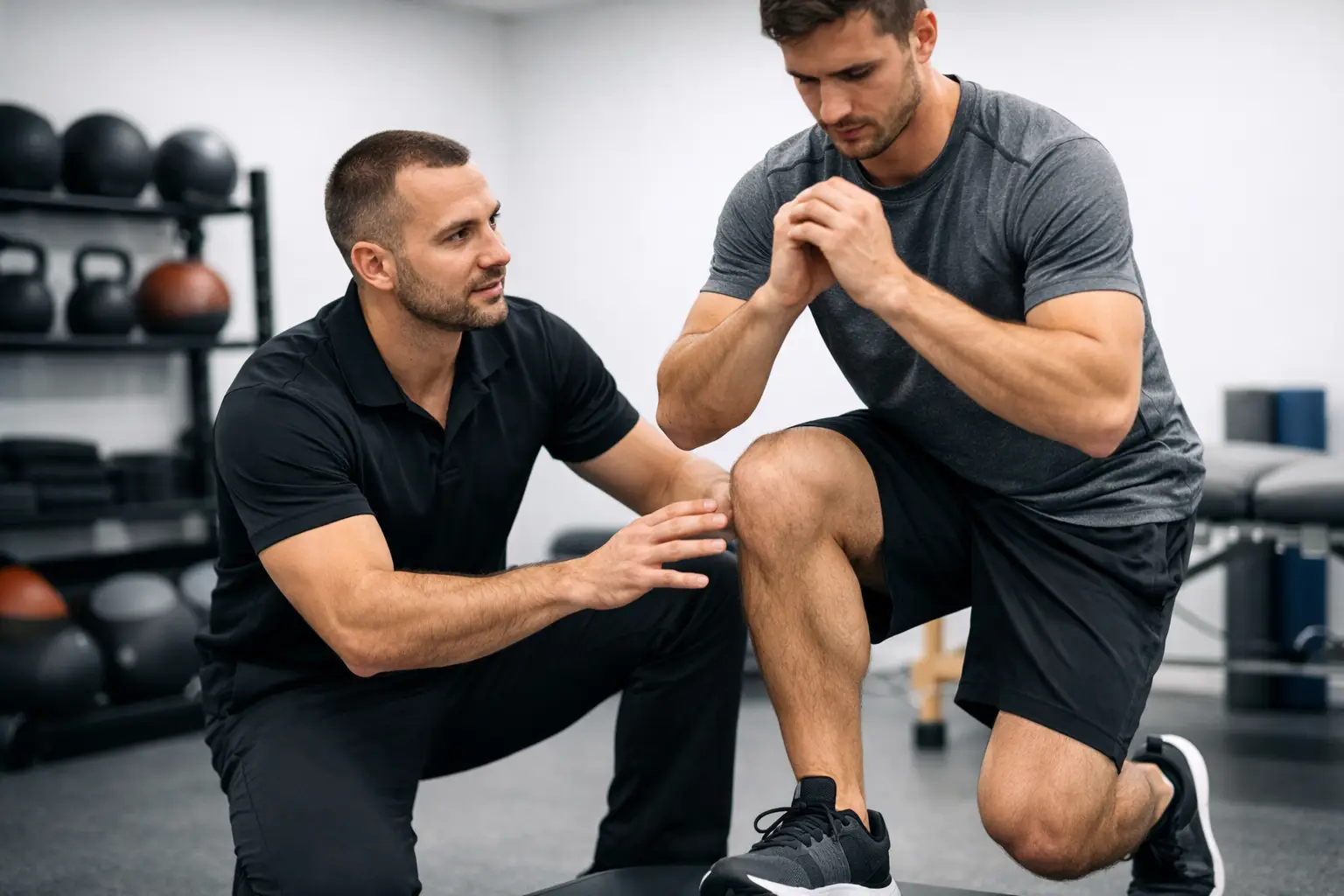
Getting cleared to play is not the same thing as being ready to play. That gap is where return to sport rehabilitation matters most. A lot of active adults feel fine walking around, working, or doing light exercise, then symptoms show up the second they sprint, cut, jump, lift heavy, or try to compete again.
That is usually not a motivation problem. It is a capacity problem. Your body may be past the early pain stage, but still not prepared for the actual demands of sport. If rehab stops too early, or stays too passive, it is easy to end up in the cycle so many people know well - feel better, test it, flare up, rest, repeat.
What return to sport rehabilitation actually means
Return to sport rehabilitation is the process of rebuilding the specific strength, movement quality, tolerance, and confidence you need to handle your sport again. Not just daily life. Not just bodyweight exercises. Not just pain reduction.
If you play hockey, soccer, golf, pickleball, CrossFit, run races, or lift in the gym, your rehab needs to reflect those demands. The goal is not to prove you can do something once. The goal is to show that your body can handle the volume, speed, force, and repetition your activity requires.
This is why a generic handout often falls short. Early rehab exercises can be useful, but there has to be a progression. At some point, you need to move from treatment table thinking to performance thinking.
Why people get stuck before they are truly ready
A lot of people have been told to rest, stretch, get treatment, and ease back in when things calm down. That can help in the short term, especially when symptoms are irritable. But if there is no plan to rebuild capacity, pain relief alone does not prepare you for sport.
This is especially common in active adults who are used to pushing through things. They feel 70 percent better, assume the problem is basically gone, and jump back into full training. Then the same knee, shoulder, back, Achilles, or hamstring issue shows up again.
Sometimes the issue is that the painful area was treated, but the bigger picture was missed. Limited hip mobility, poor trunk control, reduced ankle range, deconditioning, strength asymmetry, or a sudden spike in training load can all matter. Sometimes confidence is the missing piece. A body part can be physically improving, but if you still do not trust it, your movement changes and performance often follows.
Return to sport rehabilitation is more than symptom relief
Good rehab should reduce pain, but it should also answer harder questions. Can you absorb force? Can you produce force quickly? Can you tolerate repeated effort? Can you rotate, cut, accelerate, decelerate, land, and recover without your body finding a workaround?
That is where a more complete model makes a difference. Hands-on care, chiropractic treatment, soft tissue therapy, joint mobilization, massage therapy, shockwave therapy, Class IV laser therapy, cupping, and mobility work can all have value when they are used for a reason. They may help calm symptoms, improve tolerance, or create a better starting point for movement.
But they are tools, not the whole plan. Lasting progress usually comes from combining those tools with movement assessment, progressive exercise, and strength-based rehab that actually prepares you for what you want to return to.
What a better return to sport rehab plan looks like
The best rehab plans are not built around a diagnosis alone. They are built around the person in front of you. Two runners can both have Achilles pain and need completely different progressions. Two hockey players can both have groin symptoms but have different movement restrictions, training histories, and confidence levels.
That is why assessment matters. A strong assessment looks at your symptoms, yes, but also how you move, what your sport demands, what your current training looks like, and where the gaps are between where you are and where you need to be.
Phase 1: Settle things down without shutting everything down
Early on, the focus is often symptom management and keeping you active in ways your body can tolerate. That may mean modifying training, not stopping everything. It may include manual therapy, chiropractic care, soft tissue work, shockwave, laser, or mobility strategies if they fit your presentation.
The key is that these strategies should support movement, not replace it. Even in the early phase, rehab should be moving toward function.
Phase 2: Rebuild movement and strength
Once symptoms are more manageable, the work usually shifts toward restoring joint range, improving control, and building baseline strength. This is where targeted rehab matters. Not random exercises. Not just what feels hard. The right loading, at the right time, for the right reason.
This stage often includes tempo work, isometrics, controlled eccentrics, balance and stability drills, and strength progressions that match the injury and the sport. If you are a lifter, runner, golfer, or court sport athlete, your rehab should start to look more like your real demands as you improve.
Phase 3: Build sport-specific capacity
This is the stage many people miss. They can squat, lunge, press, or jog in a straight line, but sport is rarely that simple. Return to sport rehabilitation should eventually include impact tolerance, rotational power, acceleration and deceleration work, repeated efforts, reactive drills, and conditioning that reflects your activity.
If your rehab never gets there, it is easy to feel okay in the clinic and underprepared on the field, court, course, or gym floor.
Phase 4: Return with a plan, not a guess
Going back to sport should not be a coin flip. In most cases, it makes more sense to return gradually with clear progressions for intensity, volume, frequency, and recovery. That may mean modifying practice before competition, rebuilding weekly running volume before speed work, or reintroducing heavy lifting before max effort testing.
This is where honest conversations matter. Being eager is normal. Being ready is different.
The role of confidence in return to sport rehabilitation
A lot of rehab conversations focus on tissues, but confidence matters too. After an injury, many people hesitate without realizing it. They avoid loading one side, change mechanics, or hold back during explosive movements. That is not weakness. It is a normal protective response.
Confidence tends to improve when your rehab gives you repeated proof that your body can handle more. That means structured exposure. You do not build trust in a shoulder by only band work if your goal is overhead sport. You do not build trust in a knee by only doing easy machine work if your sport involves cutting and jumping.
When rehab is progressed properly, confidence is not forced. It is earned.
Why a gym-based rehab environment helps
For active people, there is a big difference between being treated in a room and being coached through movement in a space where you can actually load, progress, and test things properly. That is one reason gym-based rehab matters.
A clinic model that combines assessment, treatment, and performance-focused exercise can bridge the gap between pain relief and real-world return. Instead of stopping at passive care, you keep moving toward the demands that matter to you.
At Ground Up Performance & Rehab in Hamilton, that approach is a big part of the process. Chiropractic care is still part of the picture, but it sits inside a bigger rehab model that also includes physiotherapy, massage therapy, movement assessment, hands-on treatment, and strength-based progressions designed to get people back to training, work, sport, and life with more confidence.
When rehab should be adjusted
Not every setback means you are back at square one. Sometimes a mild flare-up simply means the load was too much, too fast, or poorly timed. Good rehab is rarely perfectly linear.
What matters is how the plan responds. Sometimes you need more recovery between sessions. Sometimes you need to improve sleep, training structure, or overall workload. Sometimes the issue is not the exercise itself, but how much of it you did on top of everything else. This is where individualized programming beats generic templates every time.
What to look for if you want a real return to sport plan
If your goal is to get back to sport and stay there, look for a rehab process that goes beyond temporary relief. You want clear assessment, honest communication, progressive loading, and a plan that reflects your actual activity. You want care that helps calm symptoms when needed, but also builds strength, movement options, and resilience.
Most importantly, you want a process that respects the fact that returning to sport is not just about getting out of pain. It is about being prepared for what comes next.
If you have been stuck in the cycle of resting, feeling a bit better, and then flaring up when you try to train again, there is usually a better path than guessing. The right rehab plan should help you understand what is holding you back, build your way forward, and return with more trust in your body than you had before.
